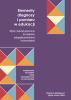
Elements of Diagnostic Assessment and Measurement in Education: Selected Readings and Supplementary Materials for Students of Preschool and Early Primary Education
Keywords:
education, pedagogy, school, preschoolSynopsis
In their monograph Elements of Diagnostic Assessment and Measurement in Education: Selected Readings and Supplementary Materials for Students of Preschool and Early Primary Education, Wojciech Błażejewski and Agata Kolasa-Skiba examine the theoretical, methodological and ethical foundations of identifying the conditions, processes and outcomes of learning. The volume aims to organise and integrate the knowledge required to develop prospective teachers’ diagnostic competence and demonstrate its applications in educational practice. Its theoretical and methodological approach draws on the analysis and synthesis of pedagogical, psychological and methodological literature, comparison of selected concepts and classifications, and adaptation of previously published materials supplemented by the authors’ commentaries. The discussion addresses relationships between diagnostic assessment, the assessment of pupils’ achievement and learning motivation, alongside educational measurement, measurement scales, and the classification, taxonomies and operationalisation of educational objectives. It also examines the case study method, data collection techniques, and principles for designing, selecting and interpreting instruments used to assess learning outcomes. Practical resources include sample observation forms for preschool children’s development and school readiness assessment, covering physical, emotional, social and cognitive domains. The synthesis indicates that the value of diagnostic assessment depends on alignment between objectives, methods, indicators and instruments, measurement reliability and validity, and attention to each child’s developmental circumstances. It highlights the limitations of numerical interpretations, the risks of reducing achievement to school grades, and the importance of feedback in supporting learning. The central conclusion emphasises the need to combine quantitative data with qualitative understanding of the child’s circumstances, apply triangulation and critically evaluate one’s diagnostic competence. Diagnostic assessment should inform individualised educational support, identify children’s strengths and difficulties, and improve teaching practice while respecting each child’s dignity, agency and welfare.